Product characteristics
Confirm the meat type, piece dimensions, tissue condition and marinade addition ratio.

Vacuum meat tumbler rolls meat with curing solution for batch marinating. Compare model load capacities, vacuum settings and installed power.
Match the specification and construction to the incoming material, processing requirements, required capacity and downstream operations.
| Model | Reference batch load | Vacuum level | Power |
|---|---|---|---|
| CC-50 | 20–30 kg | −0.04 to −0.085 MPa | 1.5 kW |
| CC-100 | 40–60 kg | −0.04 to −0.085 MPa | 1.5 kW |
| CC-200 | 80–120 kg | −0.04 to −0.085 MPa | 2.2 kW |
| CC-400 | 150–200 kg | −0.04 to −0.085 MPa | 2.25 kW |
| CC-600 | 250–350 kg | −0.04 to −0.085 MPa | 3 kW |
| CC-800 | 350–500 kg | −0.04 to −0.085 MPa | 4 kW |
| CC-1000 | 450–600 kg | −0.04 to −0.085 MPa | 5.5 kW |
| CC-1600 | 600–800 kg | −0.04 to −0.085 MPa | 7 kW |
| CC-2000 | 900–1200 kg | −0.04 to −0.085 MPa | 11 kW |
Select the appropriate model based on meat condition, batch load, vacuum requirements, tumbling time and speed.
Confirm the meat type, piece dimensions, tissue condition and marinade addition ratio.
Determine the required loading capacity from the batch load, daily batch count and target output.
Define the tumbling time, speed and operating rhythm to select the appropriate control method.
Determine the required vacuum range based on marinade penetration, air removal and product-structure requirements.
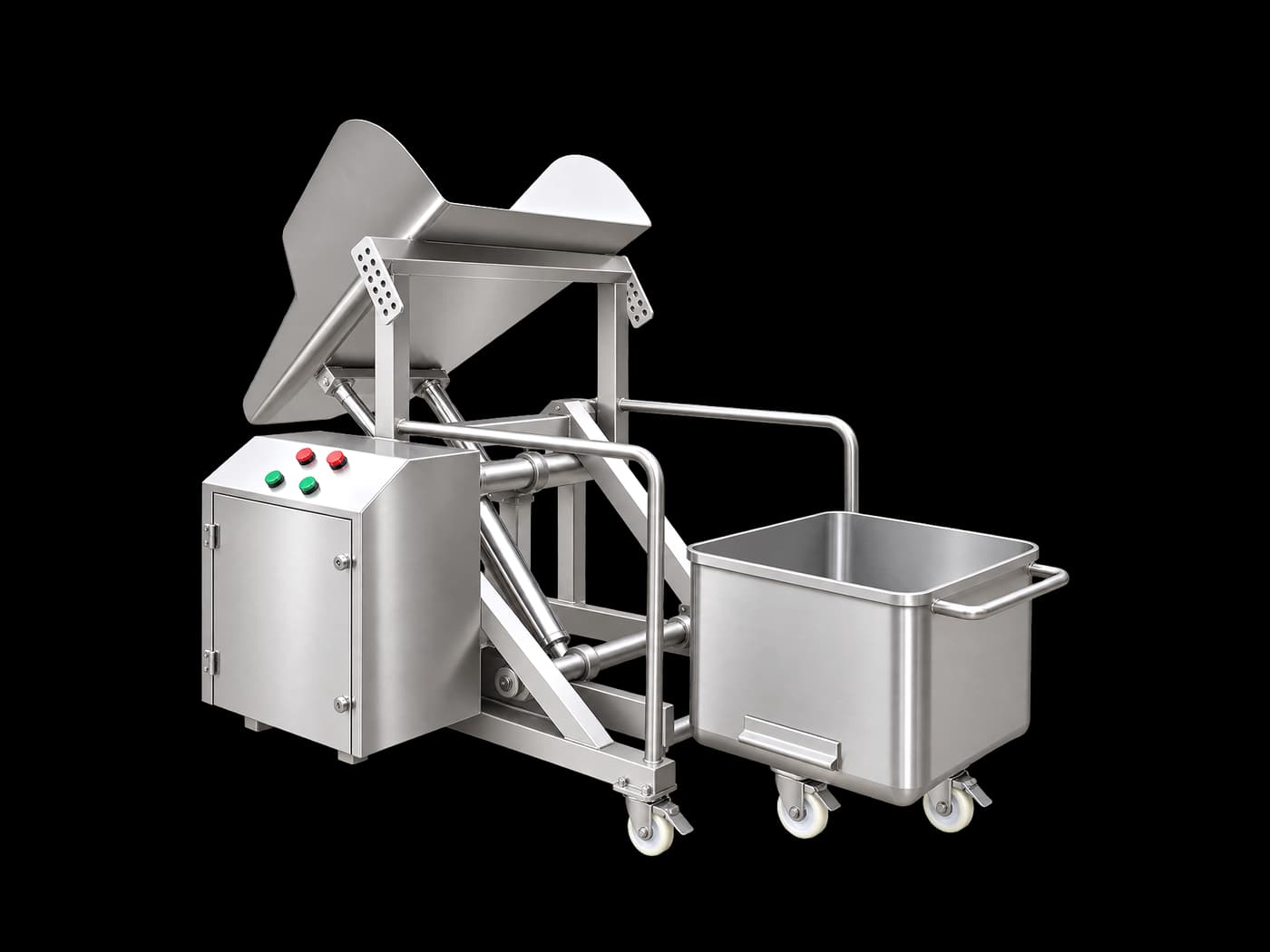
Suitable for an adjacent operation or supporting stage in a meat-processing line.
View machine
Suitable for an adjacent operation or supporting stage in a meat-processing line.
View machine
Suitable for an adjacent operation or supporting stage in a meat-processing line.
View machineShare the incoming material, required capacity, processing target and adjacent equipment. We will help confirm the configuration and line connections.