Less manual handling
Mechanical lifting, tipping and conveying reduce manual lifting, pouring and repeated handling.

Lifting, tipping and conveying solutions for food materials, with equipment and production connections selected to suit the material, container, feeding height and target throughput.
Designed for feeding and transfers between production stages, with a focus on operating efficiency, stability and coordinated material flow.
Mechanical lifting, tipping and conveying reduce manual lifting, pouring and repeated handling.
Load-bearing and conveying components are matched to the material and loading method for smooth, orderly feeding.
Lifting height, conveying direction and receiving position can be designed around your facility and workstation layout.
Batch or continuous feeding can be coordinated with upstream and downstream equipment to keep production stages working together.
Select suitable feeding and lifting equipment for your container type.
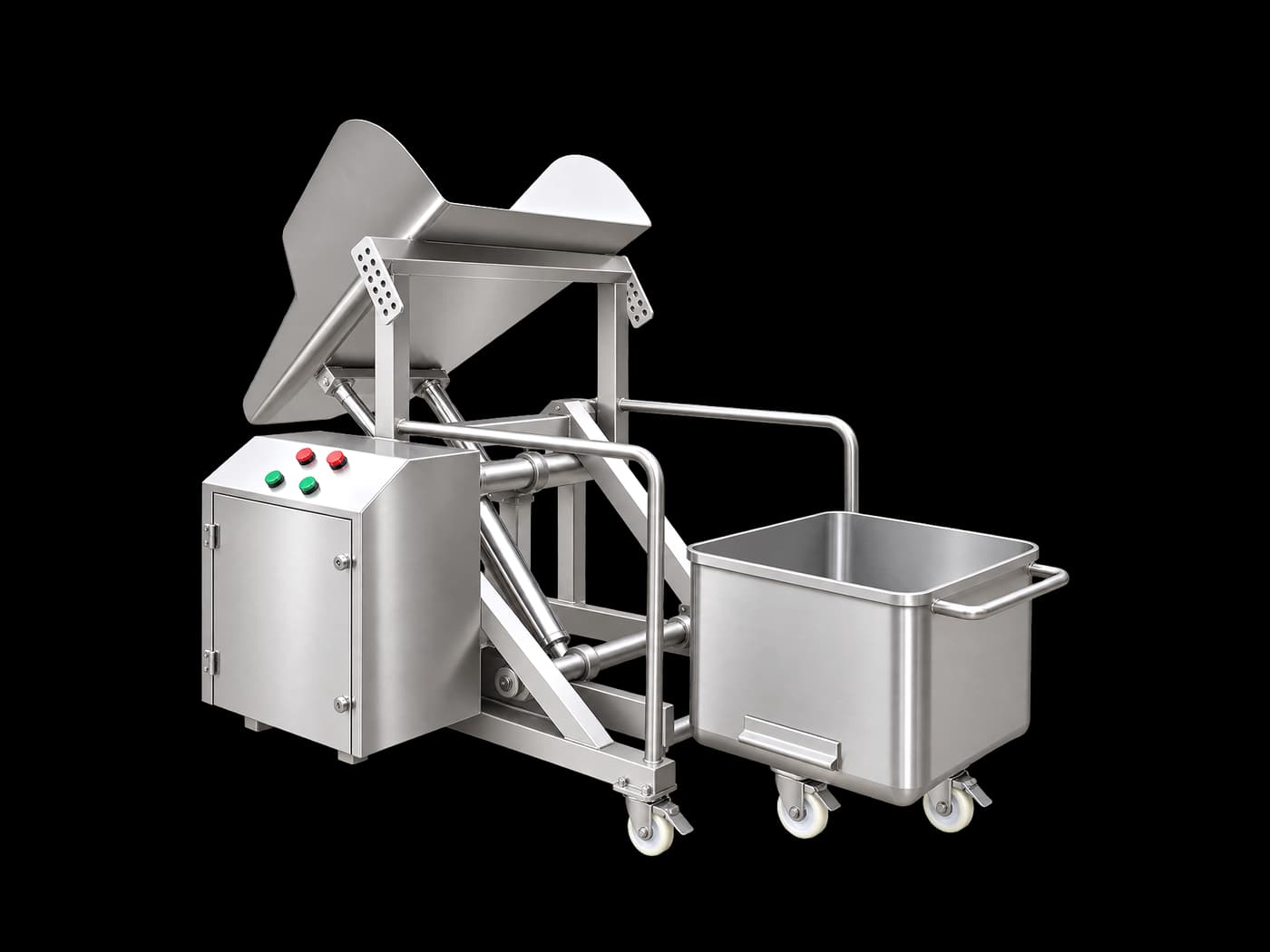
A hydraulic drive lifts the tote bin to a specified height and tips it for batch feeding.

The tote bin travels along a vertical column and tips at a preset height, allowing flexible workstation positioning.
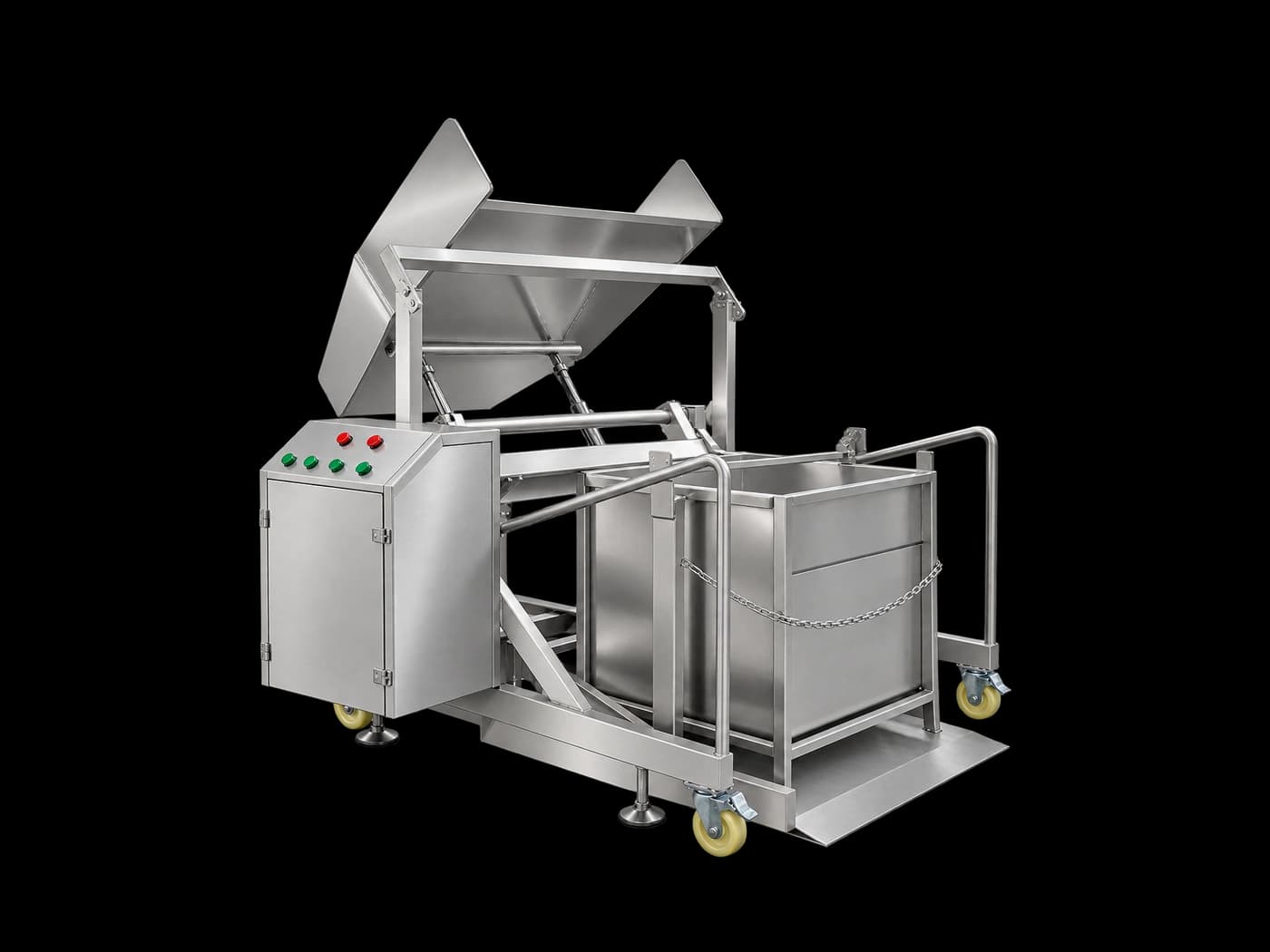
Secures and tips bins, with equipment dimensions matched to bin size, load weight and feeding position.
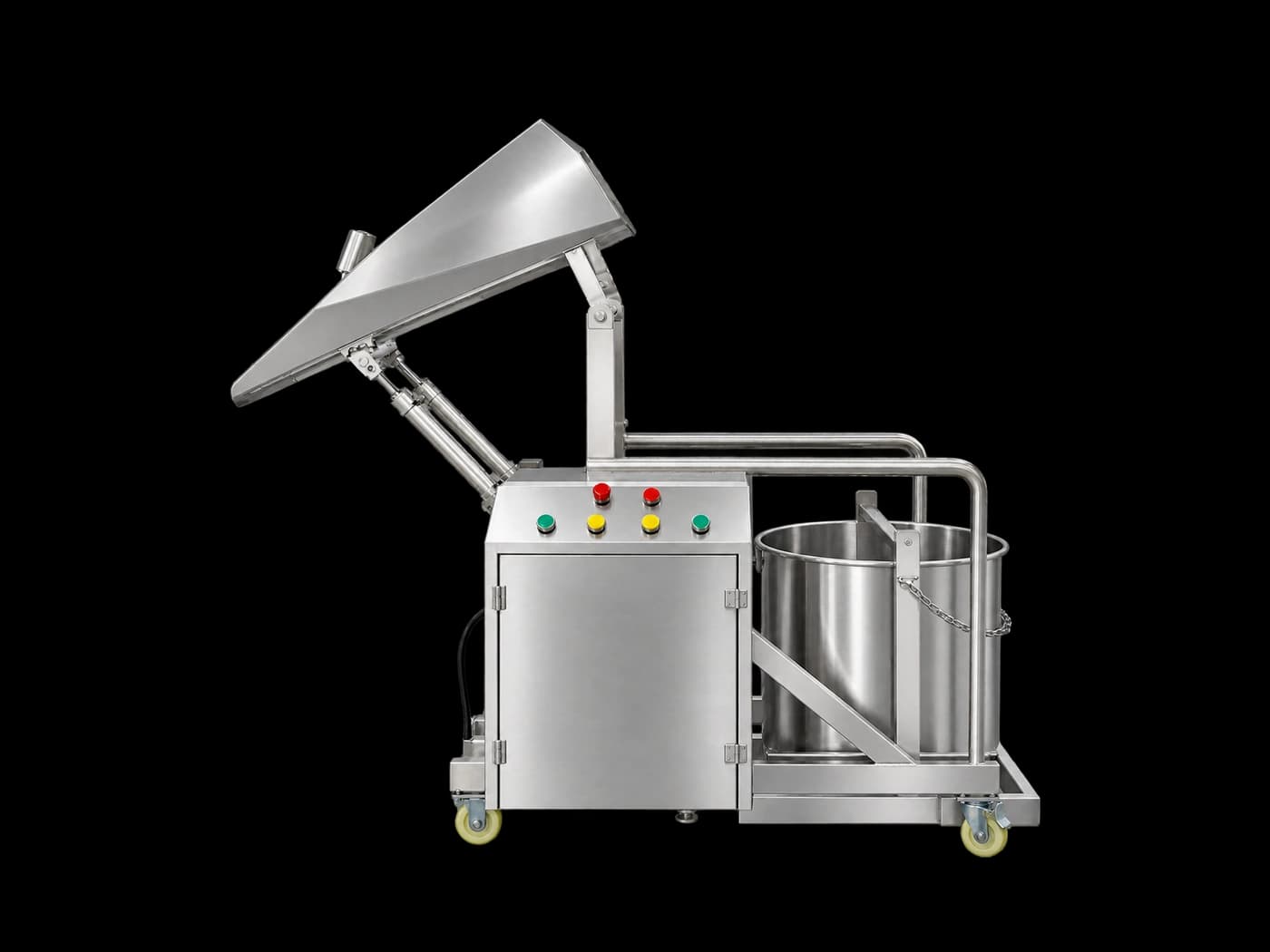
Provides automatic feeding from drums of different sizes. Equipment is selected to suit drum specifications and feeding requirements.
Suitable for conveying and lifting a wide range of food materials.
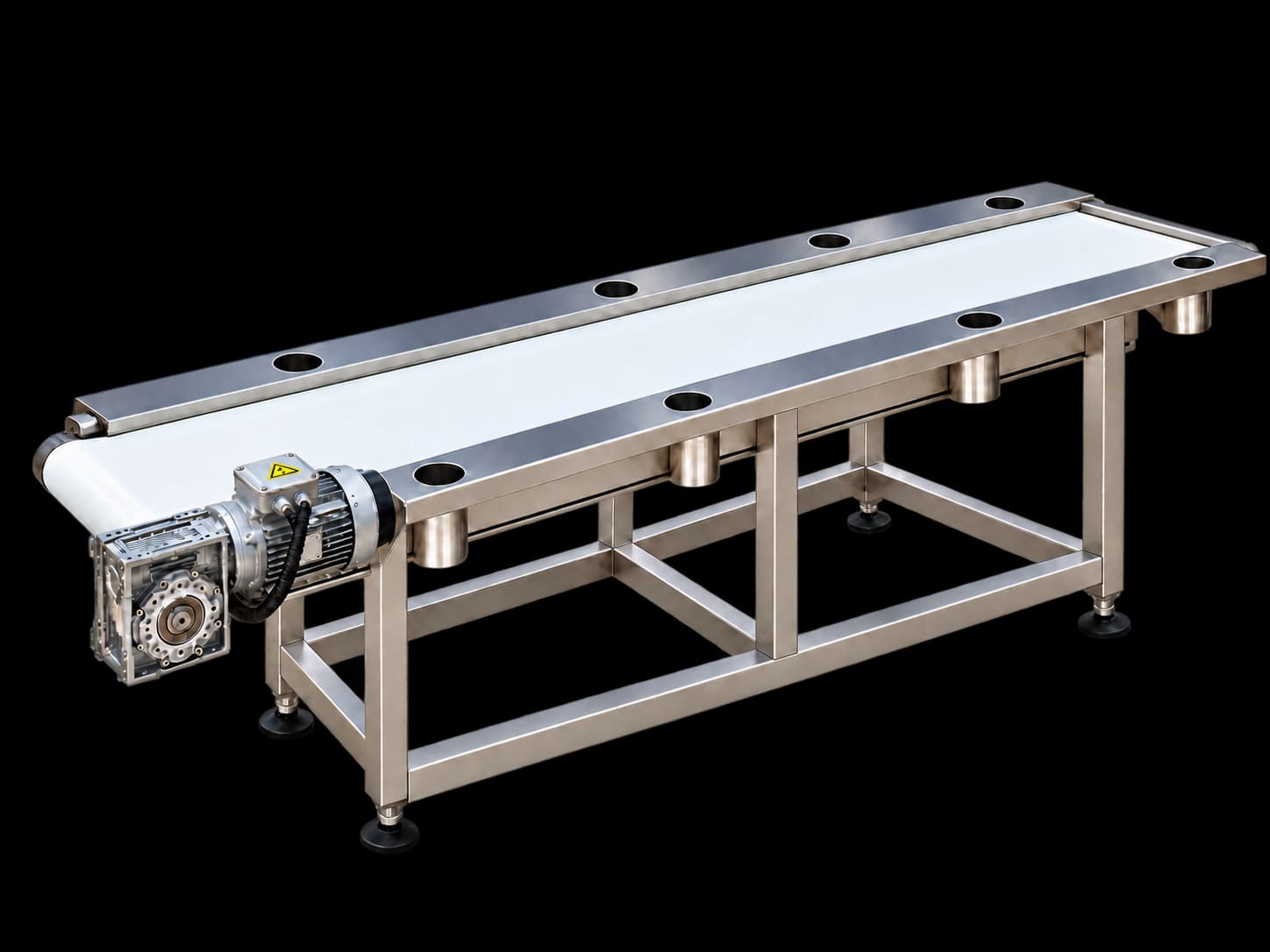
Continuously conveys food materials horizontally between sorting, processing and packaging stages, with length, belt width and working height selected to suit the layout.
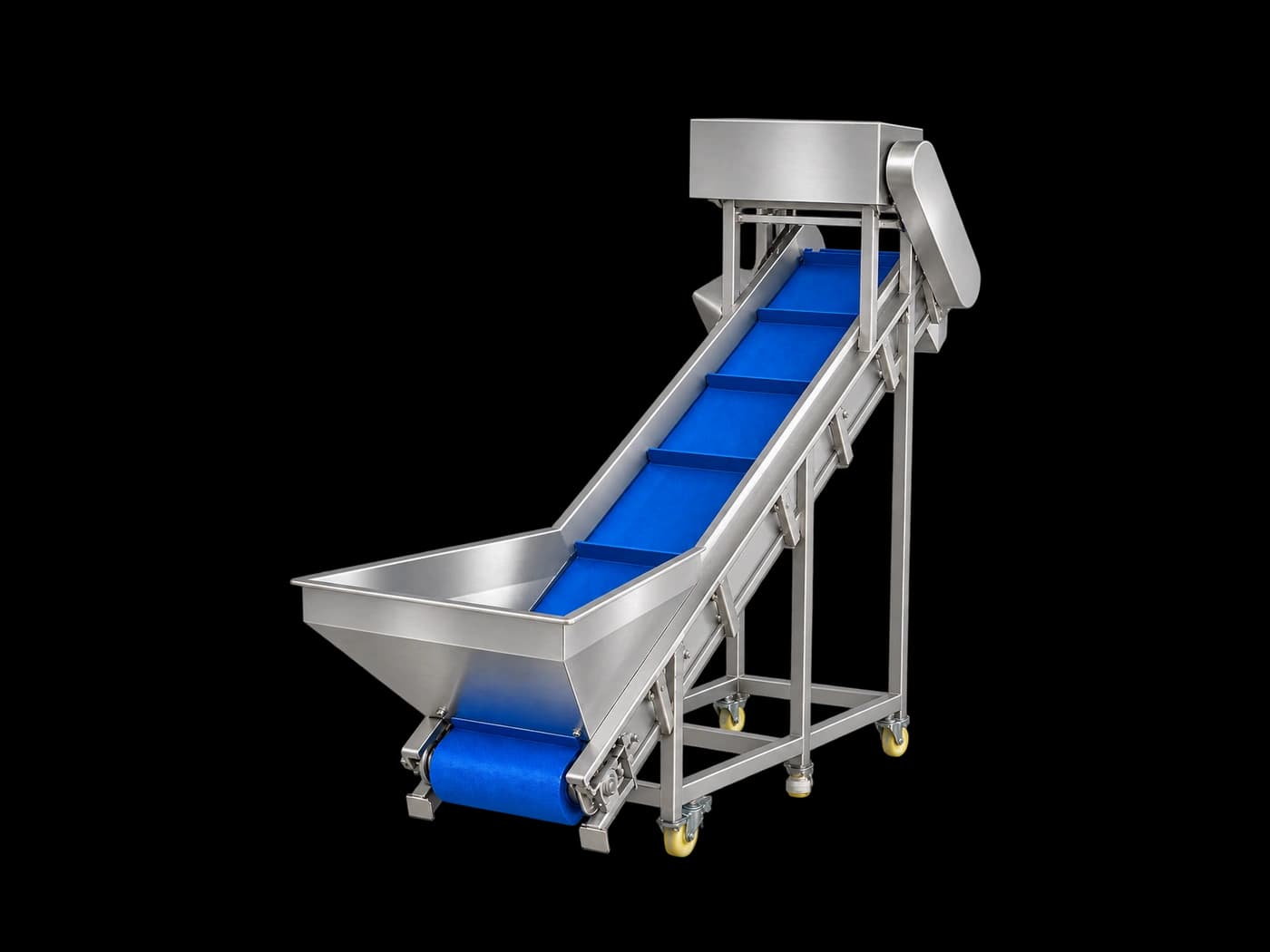
Uses a food-grade belt, with the conveyor configuration selected to suit the conveying distance, incline and receiving height.
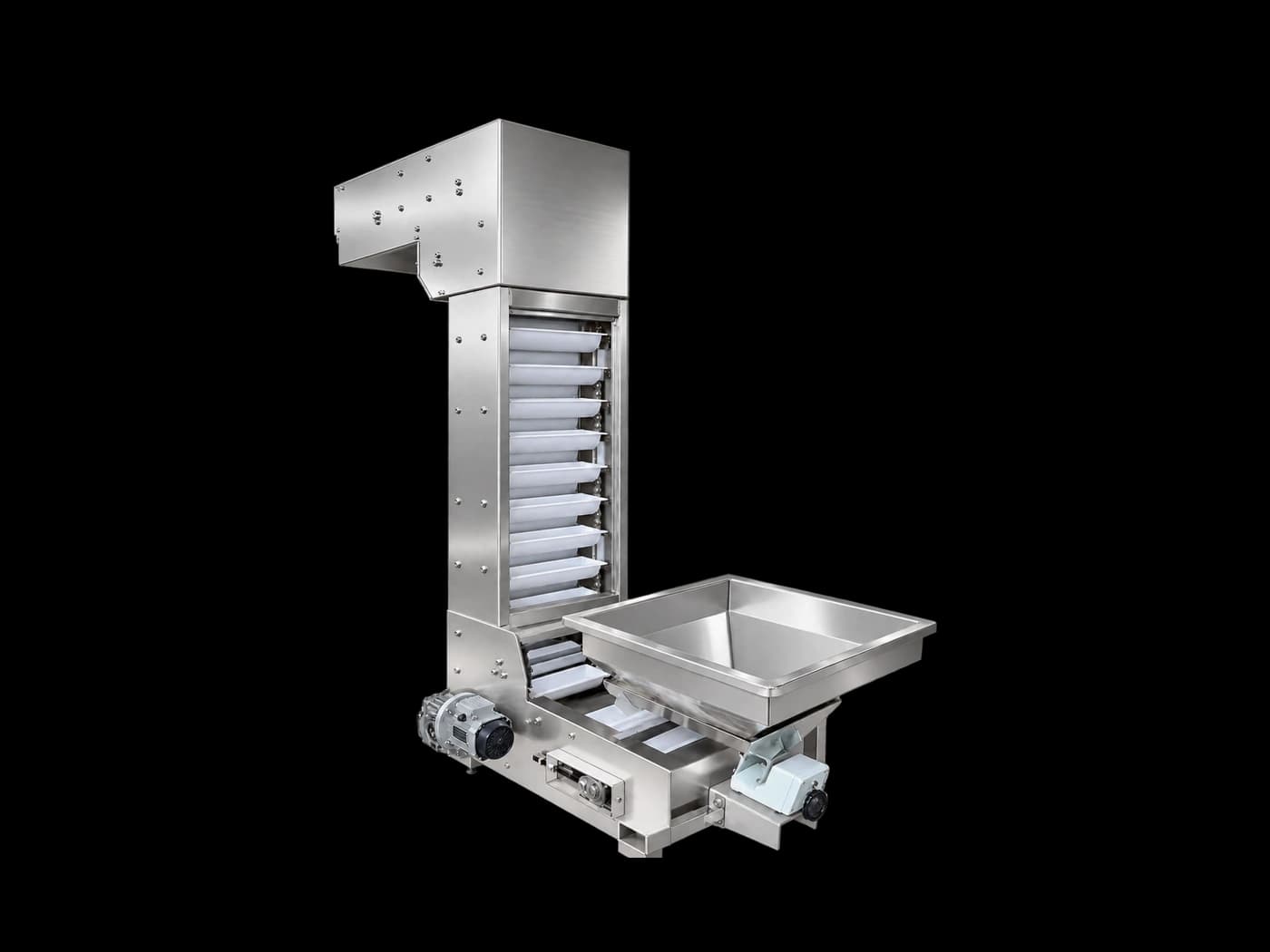
Buckets carry and elevate granules or food pieces, making it suitable for products that require gentler handling.
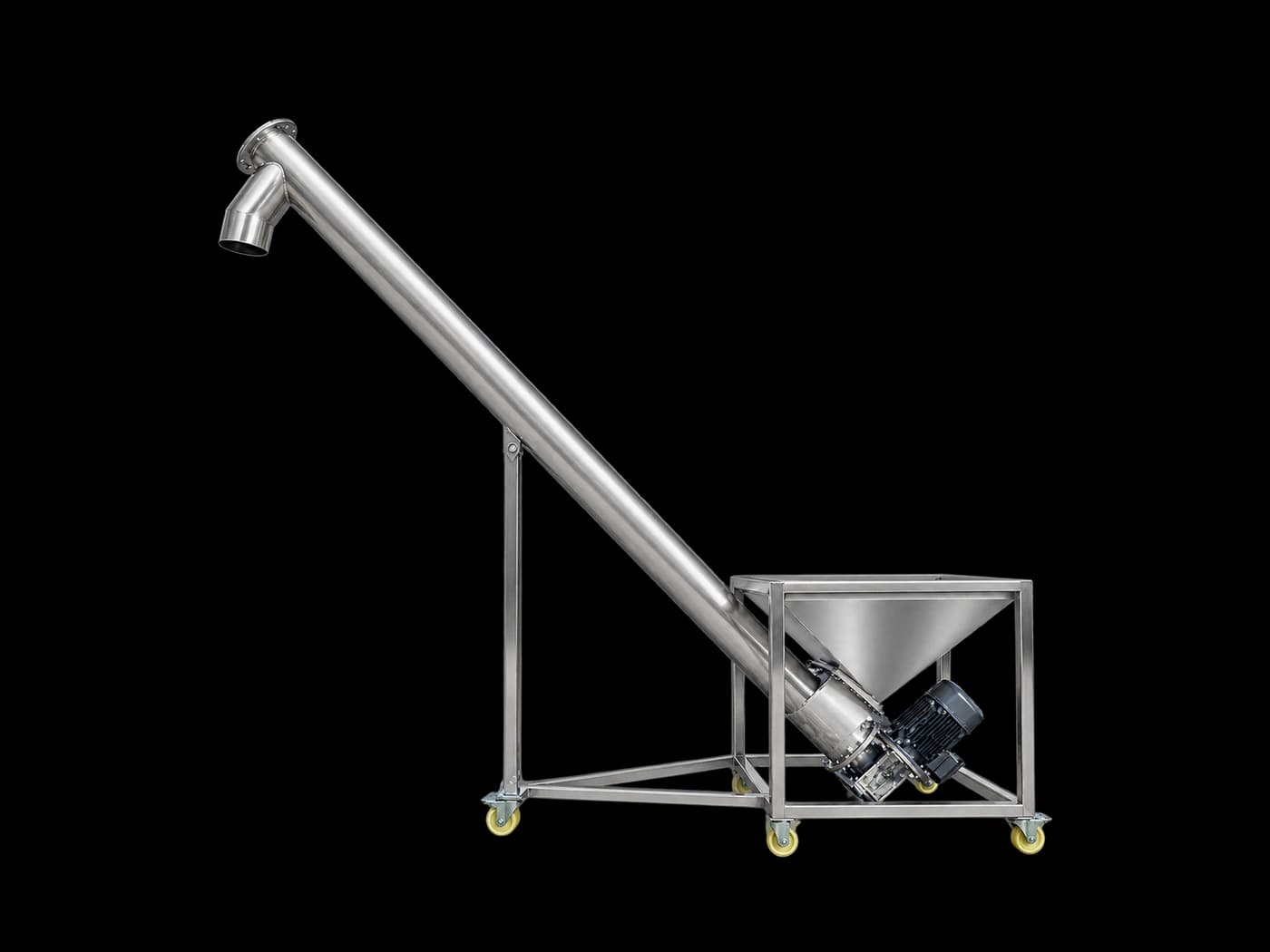
A screw moves powders and granules along a relatively enclosed conveying path to help reduce material exposure and dust.
Material properties, loading methods and facility layout determine the equipment's load capacity, conveying requirements and connections.
Material form, flowability, viscosity and fragility determine the appropriate handling and conveying method.
Container dimensions, load weight per batch and lifting height determine the load support and lifting mechanism.
Hourly feed volume, feeding frequency and production cycle times determine conveying capacity and the number of units required.
Upstream and downstream equipment connections, inlet and outlet positions, and facility layout determine how the equipment is connected and installed.
Tell us your material type, loading method, feed rate and target height. We will recommend suitable equipment based on your facility layout and connected machinery.