Dewatering and deoiling
High-speed centrifugal rotation quickly removes water or oil from product surfaces and gaps, improving downstream processing efficiency.

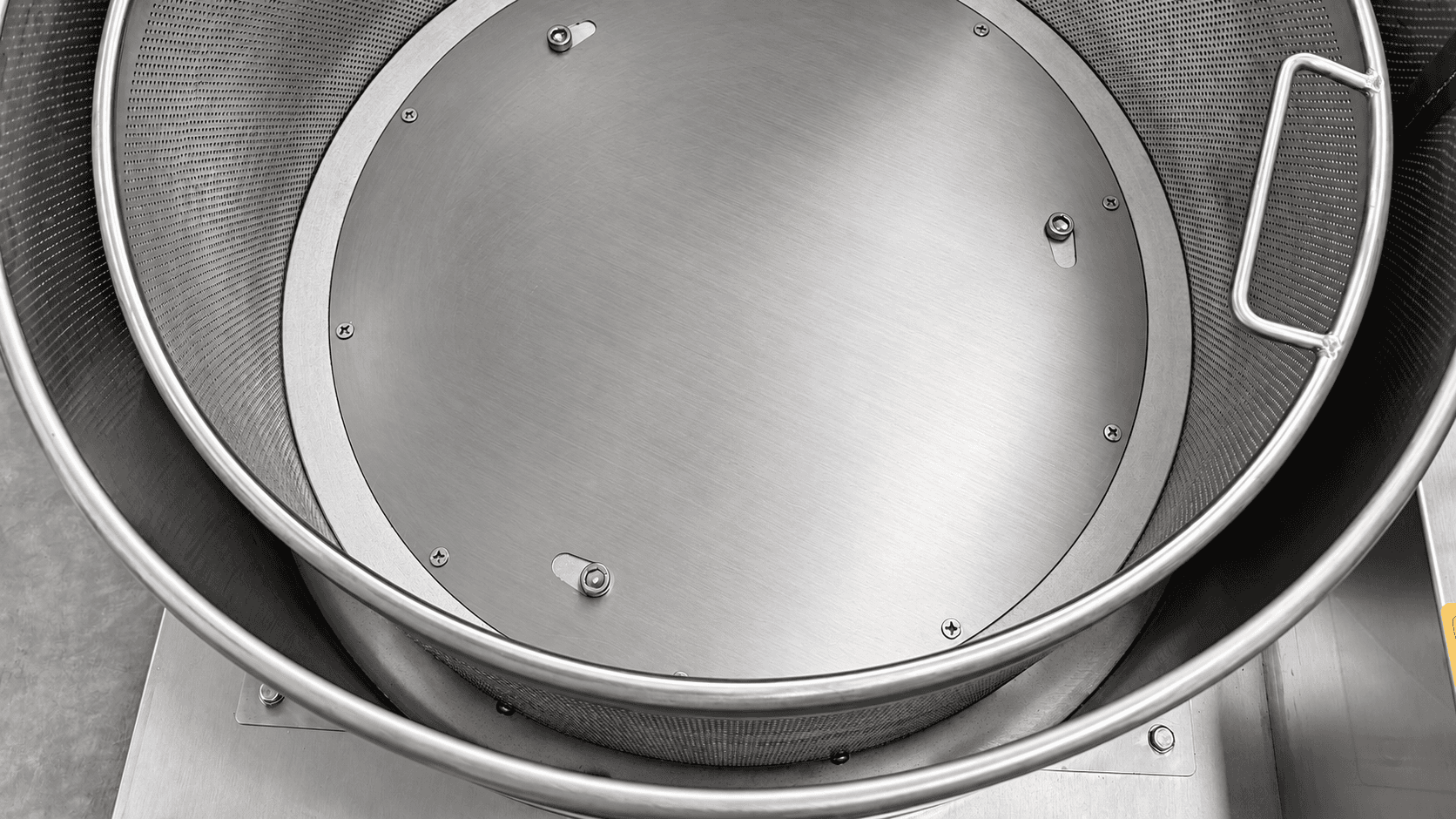
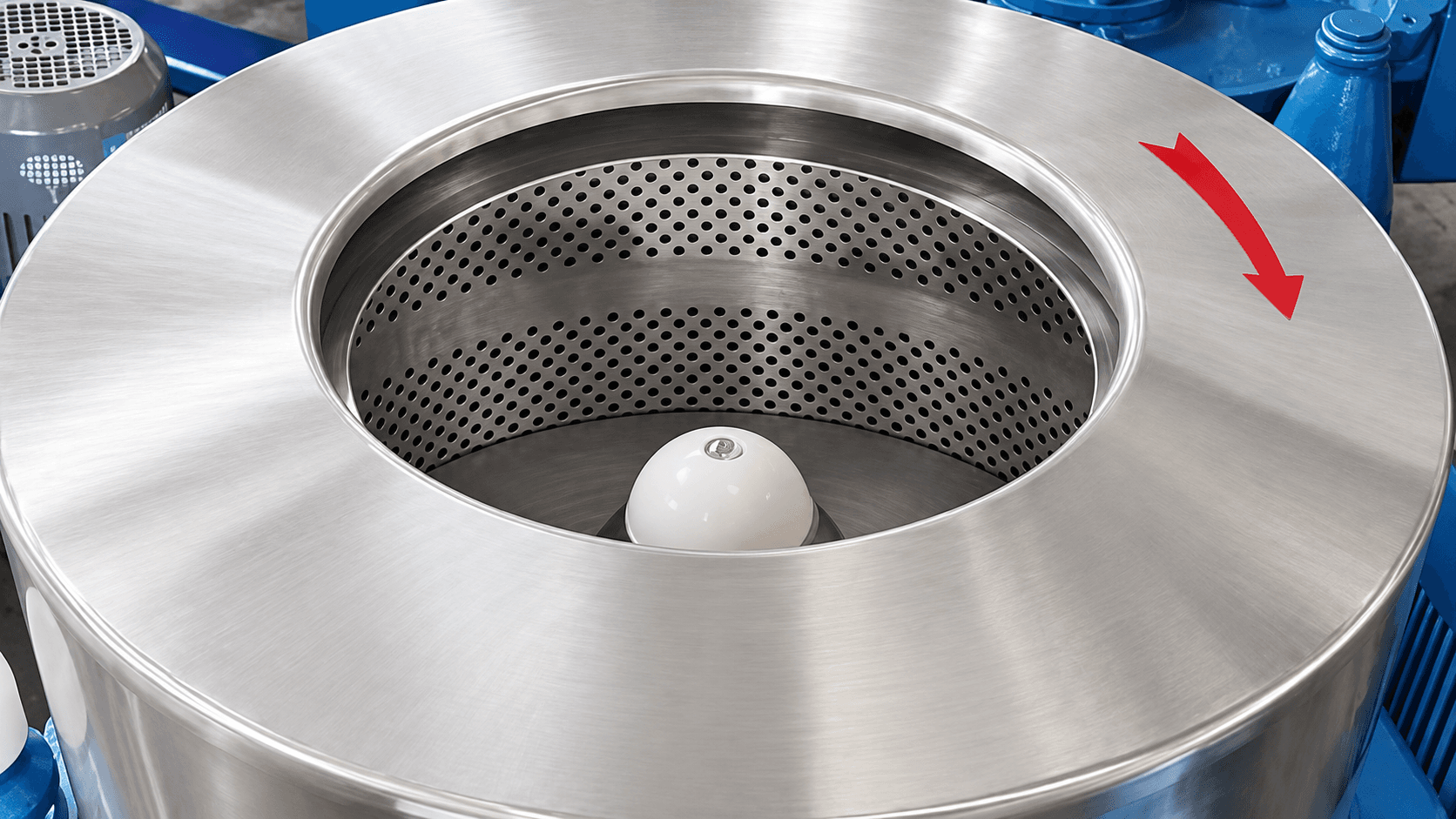

Equipment for washing, grading, thawing, blanching, pasteurizing, cooling, dewatering and drying.
Centrifugal action rapidly separates water from product surfaces and gaps, with operating time and parameters adjustable to the material condition.
High-speed centrifugal rotation quickly removes water or oil from product surfaces and gaps, improving downstream processing efficiency.
The inner basket rotates as a whole to reduce direct compression and help preserve the product's original form and integrity.
Operating time can be set around product condition and dewatering requirements for different dewatering or deoiling processes.
Timed operation and manual-assisted, hoist-assisted or hydraulic-tilting discharge, depending on the model, simplify operation, cleaning and maintenance.
High-speed basket rotation generates centrifugal force, separating water or oil from product surfaces and gaps through the perforations for centralized drainage.
The drive system rotates the dewatering basket at high speed so the product moves together with the inner basket.
Centrifugal force generated by high-speed rotation separates water or oil attached to product surfaces and gaps.
Separated liquid passes through the inner-basket perforations into the outer drum and exits through the machine's drainage structure.
Operating time is set for the product; once the set duration is reached, the machine decelerates and stops automatically to complete dewatering or deoiling.
Choose compact, heavy-duty or hydraulic-tilting centrifugal dewatering according to the product condition, batch load and discharge method.

A compact centrifugal machine for removing water from product surfaces and gaps in small-batch food processing.

A reinforced centrifugal design for larger batch loads and stable dewatering operation.

Combines centrifugal dewatering with hydraulic tipping discharge for medium batches of lightweight products.
Use product characteristics, processing requirements, batch capacity and line integration to define machine capacity, inner-basket construction, operating parameters and controls.
Match the inner-basket construction and loading method to the product type, form and weight, as well as the amount of water or oil on its surface.
Define rotation speed, operating time and control parameters from the target dewatering or deoiling result and downstream processing needs.
Use batch load, cycles per hour and daily operating time to determine machine capacity and the number of units required.
Coordinate the loading method, model-specific discharge method and receiving height with mixing, weighing, packing or other downstream processes.
Share the product, target output, incoming and outgoing condition, and factory dimensions. We will help define the machine and line connections.